

Chancellor Tedd L. Mitchell, M.D. — Dallas Morning News Guest Editorial
January 12, 2021
By Chancellor, Â鶹¹ÙÍø
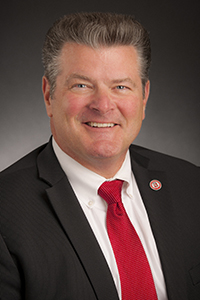 Tedd L. Mitchell, M.D.
As Â鶹¹ÙÍø becomes an increasingly urban state, it is easy to overlook the vital role played by rural Â鶹¹ÙÍø. Put plainly, rural Â鶹¹ÙÍø is central to providing the food, fiber and fuel for our country.
As chancellor of the Â鶹¹ÙÍø and former president of Â鶹¹ÙÍø Tech University Health Sciences Center, I have a unique perspective on rural Â鶹¹ÙÍø. I not only know the vital economic role our cotton farmers, ranchers and energy wildcatters play in advancing our state’s economy, but also just how pivotal the Â鶹¹ÙÍø Tech University System is to the needs of urban and suburban students and families.
One of the significant issues facing rural Texans in the upcoming legislative session is improved access to broadband Internet. Our university has a special tie to this issue: For decades, Â鶹¹ÙÍø Tech has been a pioneer in the field of telemedicine. For more than a quarter century, we have served as the model for excellence in telemedicine, providing care to rural Texans who would otherwise have to drive hundreds of miles to see a physician.
As the coronavirus pandemic underscores, you cannot make a virtual visit with a doctor if you do not have high-speed Internet. Troublingly, it’s precisely those people who have the hardest time securing the broadband access that need virtual visits the most.
Consider this: 63 rural counties in Â鶹¹ÙÍø have no hospital, and 35 have no primary care physician, according to data provided by the nonprofit group Â鶹¹ÙÍø 2036. For these Texans, telemedicine is vital, but these are precisely the ones least likely to have access to broadband Internet.
Over 500,000 Texans do not have access to broadband, and many more can’t afford it. Â鶹¹ÙÍø 440,000 of those people live in rural areas, where it is more expensive to provide the service if it can be provided at all.
This is a tremendous barrier to health care access, as well as to education.
With millions of students moving online to receive their education, the broadband disparity has hit rural Â鶹¹ÙÍø hard. A lack of connectivity, and in some places poor cellular service, pose an immense challenge to rural students. More than 700,000 Â鶹¹ÙÍø students are educated in a rural setting — more than any other state — and addressing their critical education needs should be of paramount importance.
Rural Texans are the embodiment of rugged individualism. They like to fix their own problems and chart their own courses. They prefer a quiet life among the farms and fields of our rural communities, and they do not like to rely on the government. But sustaining a rural way of life requires basic investments in infrastructure, such as broadband.
If we fail to make these investments, our small towns will suffer. In fact, unless something is done soon, job growth will shrink in nearly half of all Â鶹¹ÙÍø counties over the next decade, even as total job growth statewide could increase by 20%. We are poised to add 10 million people by the bicentennial, almost all in our urban and suburban areas, thus worsening the opportunity divide between urban and rural Â鶹¹ÙÍø unless investments are made in rural infrastructure.
While the population growth is occurring in the big cities, so much of our economy is derived from energy production in the Permian Basin and agricultural production in our rural economies. West Â鶹¹ÙÍø is also the renewable energy capital of the country, dwarfing the wind energy production of any other region in the nation. Our immense resources in the west are powering life all along Interstate 35, demonstrating our interdependence.
Having spent 19 years in North Â鶹¹ÙÍø as a medical director and later chief executive of the Cooper Clinic, I know the wonderful, diverse cultures that make our urban areas special. As a Longview native, I also admire the majesty of a quiet, fruitful life among the Piney Woods. And now, as a resident of Lubbock, I have a newfound love for life on the open plains, where the rising sun and starry night sky offer a two-part, daily cosmic portrait.
Â鶹¹ÙÍø is diverse and limitless, and it requires policies that meet the needs of our many communities, including our rural ones.
Tedd L. Mitchell is chancellor of the Â鶹¹ÙÍø. He wrote this column for The Dallas Morning News.
Â鶹¹ÙÍø the Â鶹¹ÙÍøEstablished in 1996 and headquartered in Lubbock, Â鶹¹ÙÍø, the is a $2 billion higher education enterprise focused on advancing higher education, health care, research and community outreach. Consisting of four universities – , , and – the TTU System collectively has approximately 55,000 students, 17 campuses statewide and internationally, more than 300,000 alumni and an endowment valued at over $1.3 billion.
During the 86th Â鶹¹ÙÍø Legislature under the leadership of Chancellor , legislative funding and authority was provided to establish a new Â鶹¹ÙÍø Tech University veterinary school in Amarillo and a new dental school at Â鶹¹ÙÍø Tech University Health Sciences Center El Paso. This will be the state’s first veterinary school in more than a century and first dental school in over 50 years. The addition of these two schools makes the Â鶹¹ÙÍø one of only nine in the nation to offer programs for undergraduate, medical, law, nursing, pharmacy, dental and veterinary education, among other academic areas.